21 years in East Africa and counting...

Saturday, June 14, 2025

Soysambu - Day 2 & 3

Day 2

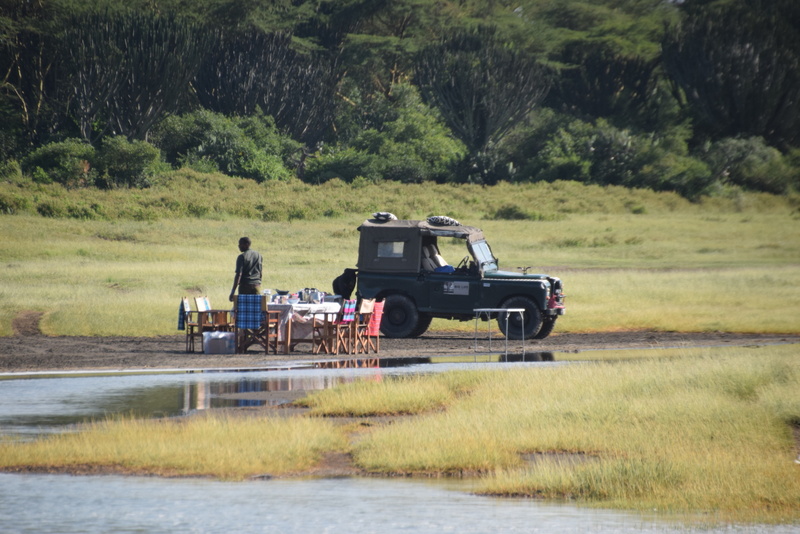
Breakfast on the Lake

setting up the breakfast
 

The next morning, breakfast would be next to the lake which was a short walk from our camp. The skies had cleared after the clouds and rain from the previous evening. The temperature was cool and sunny – perfect for an outdoor breakfast. They had brought a small cooker with them and were able to prepare bacon, eggs and toast. It was quite the spread. 
 

Nearby on the lake were flamingos, pelicans and various sorts of other birds. On the other side, zebras were grazing. Pretty idyllic.


After eating, we walked along the edge of the lake, enjoying the wonderful weather and setting. Eventually, we would make our way back to camp to read and relax until lunch.


Caves

In the afternoon, we headed out on another drive. This time our primary destination was a cave network about 20 minutes away. I often do my homework in advance of going to a new destination, but, in this case, I confess that I was unaware that these caves even existed.


The caves are an abandoned diatomite mine. Diatomite (diatomaceous earth), I discovered, is a white chalky substance composed primarily of fossilized diatoms, a type of algae. Which means that the lake near our camp was much, much bigger millions of years ago. Diatomite is used in everything from toothpaste to roads, cat litter, filters, polish, etc. Who knew.


tinier opening

There are multiple entrances to the caves, some of which were barely big enough for someone my size to fit through. I’m somewhat claustrophobic so it was a bit uncomfortable at times. Thankfully, most of the tunnels were decent-sized once you were inside and I could often walk upright. I did bang my head a few times, but the texture of the diatomite is soft so the result was getting the chalky, white dust all over me.


We were told in advance that we needed to bring headlamps, and they turned out to be essential, particularly once you start winding your way around the tunnels no longer in sight of the entrance.


lots of bones


The Lion King hyena den - eerie similarities   

The guide referred to them as “hyena caves”, and there was plenty of evidence that it is a popular hangout for them. There were bones everywhere. Thankfully we didn’t see any hyenas in the caves at the time we were there. I would think that encountering them in their den could be quite dangerous. But it is indeed an eerie and surreal place. It made me think of the hyena den from The Lion King.

I read later that these caves usually have tons of bats, but I didn’t see or hear any. They also supposedly provide shelter for lions. Who knows.

crested cranes

* * *

After the caves, we drove around a bit more and then headed back to the camp for tea. In the late afternoon, our guide proposed sundowners near the lake. At the time he proposed it, it had been raining. I would have wanted to do it rain or no rain, but I know not everyone enjoys “bad” weather like I do. In the end, the rain stopped, and we were able to enjoy drinks by the lake, albeit clouds obscuring the sunset.


That evening, we had another nice dinner, celebrated a birthday, spent some time by the fire and then retired to our tents. During the night I was awoken at about 2am by the sound of someone walking near the tent. I thought it was probably one of the staff keeping watch during the night. But then it sounded like two or three people. As the sounds became closer, it became clear that it was animals rather than humans. I got up to peer through a screen on the back side of the tent and in the dark I could see the silhouette of a buffalo. Eventually I would see three of them, munching grass and working their way around the tent. These guys are massive when you see them up close and they can be dangerous. I’m glad that I didn’t encounter them the previous night when I stepped out at around the same time to pee. 


 Day 3

The second morning that we were there, we had breakfast outside but not at the lake. We would need to break camp by 10am so there wasn’t time. The setting at the camp was still quite wonderful, with a couple of giraffes grazing in the distance as we sipped our coffee.


After saying our farewells to the others, we headed out. We decided to take a different road – one that was more obscure but more or less headed generally in the direction we needed to go. I do enjoy exploring new roads. I assumed that the worst that could happen is that we hit a dead-end and would need to turn around. In the end, we were able to find our way to the gate. Having cell reception can make you a bit more daring than you would be otherwise.

From the gate, it took less than two and a half hours to get home. Driving on Kenyan highways is not for the faint of heart. I read recently that Kenya has the highest rate of road deaths per number of vehicles. I don’t know if it’s true, but I do know that there are lots of accidents, including an ugly one that we saw a few years ago on this road. But this road does offer some great views at times, including the Rift Valley from high above and Mt. Longonot, the extinct volcano that we climate a couple years ago.

Apparently, the train from Nairobi used to pass through Soysambu back in the day. That would have been cool.

Off to Mogadishu one more time and then we’ll get a vacation next month. Can’t wait.


Soysambu - Day 1

A few months ago, we made arrangements with some friends to go to Soysambu, a wildlife conservancy about two and a half hours north of Nairobi in the center of Kenya’s Great Rift Valley. Last weekend, it was finally time to venture out to this wonderful tented camp overlooking Lake Elementaita. 

We had been to this part of Kenya back in 2017 but not to this conservancy. During that visit, we stayed in a rather shoddy hotel on the shores of the lake. It wasn’t overly eventful, but I do remember lots of beautiful flamingos and our daughters drawing all over each other with colored pens (while we were in another room trying to take a nap). This time, the girls are eight years older and are far different travel companions than they were back then.

The Conservancy

Conservancies allow people, either on their own or with other properties, to turn massive land holdings into large, protected areas for wildlife – sort of like a national park but on private land. These landowners can then earn income by leasing that land for safaris, lodges and other tourism activities. Or they can run these businesses themselves. And, from what I understand, landowners are further incentivized through property tax exemptions (though they are taxed on any revenue generated on the land).

This particular conservancy sits on land that has a long and storied history that I won’t go into here (though I think I might have touched on it in a previous blog a few years ago). But there have been many books and a couple of movies based on lives of the settlers to this area – colonial era aristocrats who developed the land by day and had cocaine-fueled, wild parties by night. The peak of this debauchery took place in the interwar period of the 1920s and 30s. When Kenya gained its independence in December 1963, many British left the country to start their lives in England. Many others, including a lot of these landowners, remained in the country and took on Kenyan citizenship.

Soysambu’s original owner settled on the land in the early 1900s, a nobleman from the British aristocracy, and was one of the early English settlers in Kenya. His line of Lords/Barons have run the property through to this day, though the depravity has apparently subsided. It’s now a modern, forward-thinking conservancy that integrates agricultural production with wildlife conservation. The adjacent Lake Elementaita is a UNESCO World Heritage Site. The conservancy has about 450 recorded species of birds and there are over ten thousand species of wildlife altogether. It has some of the biggest flocks of flamingos in Africa.

* * *

Day 1


We arrived at the conservancy by mid-afternoon. The two other couples had arrived not long before we did. We settled into our framed tent and returned to the common tent (with comfy sofas and a dining area) to have tea and soak in the wonderful setting. This time of year, post-rainy season, the areas is green and lush, and the temperature was ideal. From where I was sitting, I could see the lake off in the distance. Zebras and elands were grazing nearby. Monkeys were playing in the acacia trees to my right. It was a stark contrast to our noisy, urban setting in Nairobi.


the camp with Lake Elementaita in the background

There are no fences except for a string that is tethered between some small metal stakes that encircle most of the property, I assume as a minor deterrent for the wildlife. I have to say, I can’t think of any creature that would be deterred by a small string about two feet off the ground. We were told that buffalo ignore (trample/step over) the string and graze around the tents at night (which they did), so we were not to wander about after dark.

 * * *

After relaxing and catching up with our friends, we headed out in a couple of 4WD vehicles to do some exploring. Our conservancy booking included support staff, one of which doubled as a guide. He said there was a pride of lions about 30 minutes away so we thought we would go on a little game drive before dinner.


eland

The roads in the conservancy are quite good, though I understand why they say it is 4WD only. Along the way there were loads of animals including elands, impalas, gazelles, buffalos, baboons, zebras, warthogs, giraffes, hyenas, etc. For some reason I expected that there would be fewer animals than you might find in a national park, but that was not the case. No rhinos, cheetahs or elephants, however.


It was cloudy and cool, and I expected it to rain at any moment. Though I love the rain, I was hoping it would hold off until we were headed back to the camp. Animals usually seek shelter if it rains very hard and that obviously makes them less visible.


waterbuck

After driving for about 30 minutes, we spotted another vehicle off in the distance parked near the base of a hill. We hadn’t seen any other vehicles to that point, and I was hopeful that this was someone checking out a lion pride. And indeed, it was.


true confessions, this was taken by one of our friends (who had a much better lens)

Other than the fact that the lighting wasn’t great, the scene could not have been more ideal – a couple of lionesses lounging with their cubs. I think we counted nine lions altogether. The cubs were playing, nursing, being cleaned by their mothers. Insanely cute. I love shutting off the vehicle, enjoying the quiet and just taking in the setting. There was a cool breeze blowing and an occasional sprinkle of rain.


money shot, again, sadly not mine

We must have stayed for about a half hour. Eventually the rain began to pick up and the lions began to edge back into the brush. It was time to go. We began to make our way back to camp, spinning in the mud a few times, occasionally slowing to allow animals to cross in front of us. Always nice to arrive at camp after a successful trek in the bush. 

In the evening, the guys made a big fire. It’s so great to sit by a fire in a bush camp. You could hear hyenas yelping in the distance along with other sounds of the savanna at night. Eventually the staff brought our dinner. We had a nice hot meal, some wine, good conversation, then off to our tents.